Online or onsite, instructor-led live C++ training courses demonstrate through hands-on practice how to develop applications with C++, C++11, C++14, C++17, and other versions.
C++ training is available as "online live training" or "onsite live training". Online live training (aka "remote live training") is carried out by way of an interactive, remote desktop. Onsite live C++ trainings in Michigan can be carried out locally on customer premises or in NobleProg corporate training centers.
NobleProg -- Your Local Training Provider
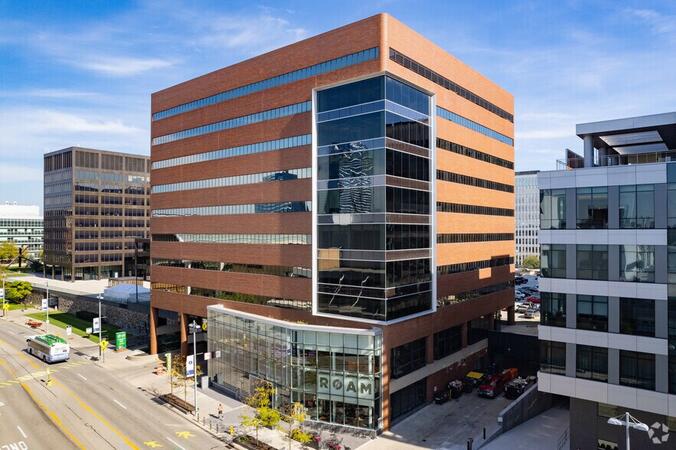
Detroit, MI - Renaissance Center
400 Renaissance Center, Detroit, United States, 48243
The GM Renaissance Center is conveniently located in downtown Detroit and easily accessed by car via Interstates 75 or 94, with secure underground parking available on site. Travelers flying into Detroit Metropolitan Airport (DTW) can expect a 25–30 minute trip by taxi or rideshare via I‑94. Public transit is efficient: the Detroit People Mover stops directly at the Renaissance Center station, and DDOT routes 3 and 9 serve nearby Jefferson Avenue. Pedestrian skywalks provide safe indoor access from downtown hotels, parking garages, and the riverwalk.
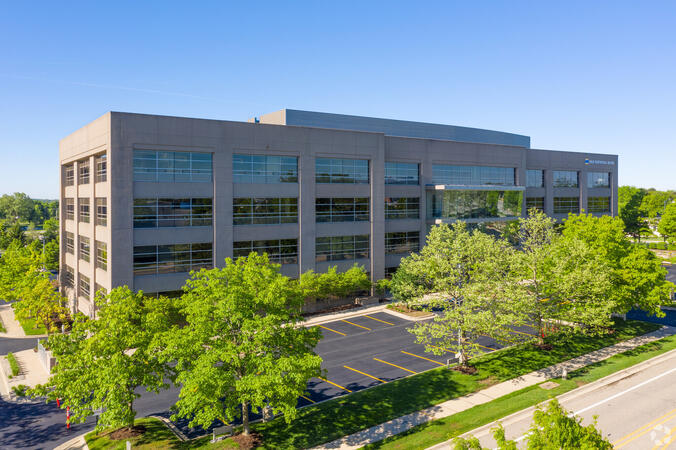
Ann Arbor, MI – Regus - South State Commons I
2723 S State St, Ann Arbor, United States, 48104
Regus South State Commons I is conveniently located off I‑94 via Exit 177 (State Street), with easy access to downtown Ann Arbor and surrounding suburbs. The building offers free on-site surface parking for guests. From Detroit Metropolitan Airport (DTW), the venue can be reached in approximately 20–25 minutes by taxi or rideshare via I‑94 West. Local public transit service (TheRide) operates Route 24 along South State Street, with a stop within a short 2-minute walk of the building.
Grand Rapids, MI - Regus – Calder Plaza
250 Monroe Ave NW, Grand Rapids, United States, 49503
The venue sits centrally at 250 Monroe Avenue NW in downtown Grand Rapids, easily accessed by car via US‑131 or I‑196—with connections via Monroe or Ottawa exits—and offers shared underground and surface parking. From Gerald R. Ford International Airport, take I‑96 East then I‑196 West into the city; the drive is about 20 minutes. Public transit through Rapid bus routes stops near Monroe or Ottawa Avenue, just a short walk from the Regus entrance; the downtown area is pedestrian-friendly.
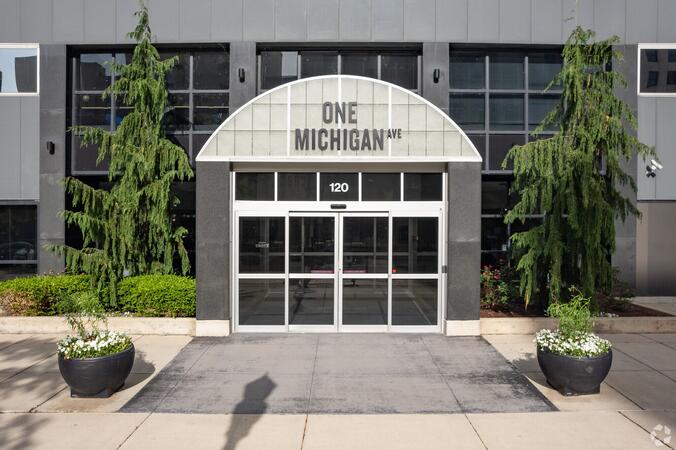
Lansing, MI - Regus - One Michigan Avenue
120 North Washington Square, Lansing, United States, 48933
The venue is located in the heart of Lansing’s central business district at 120 North Washington Square, easily accessible by car via I‑496 or US‑127 with convenient street parking and a nearby parking ramp. From Capital Region International Airport (LAN), the location is approximately a 12‑minute drive west via I‑96 and US‑127, with taxis and rideshares readily available. Public transit users can take CATA bus routes that stop just a block away on Washington or Grand Avenue, offering seamless access to the venue.
This instructor-led, live training in Michigan (online or onsite) is aimed at developers who wish to use advanced C++ programming techniques to develop complex, secure, and high-performance systems and applications.
By the end of this training, participants will be able to:
Set up a development environment that includes all C++ libraries, packages and frameworks.
Understand the features, components, and basic elements of C++.
Create complex C++ applications using advanced programming techniques.
Learn how to write readable, fast, and secure code in C++.
Know the common security pitfalls in C++ language and how to mitigate them.
Implement test strategies for code quality and security control.
Use the diagnostics and debugging tools in C++ development.
Writing secure C and C++ code requires rigorous defense against malicious exploitation, memory corruption, and input validation bypasses. This program examines vulnerability patterns including buffer overflows, use-after-free, integer overflows, and type confusion. Participants apply secure coding guidelines, static analysis tools, and defensive programming techniques to eliminate weaknesses, enforce input sanitization, and deliver hardened software resilient against cyberattacks.
Is C++ suitable for embedded systems such as microcontrollers and real-time-operating-systems?
Should object-oriented-programming be used in microcontrollers?
Is C++ too far removed from the hardware to be efficient?
This instructor-led, live training addresses these questions and demonstrates through discussion and practice how C++ can be used to develop embedded systems with code that is accurate, readable, and efficient. Participants put theory into practice through the creation of a sample embedded application in C++.
By the end of this training, participants will be able to:
Understand the principles of object-oriented modelling, embedded software programming and real-time programming
Produce code for embedded systems that is small, fast and safe
Avoid code bloat from templates, exceptions, and other language features
Understand the issues related to using C++ in safety-critical and real-time systems
Debug a C++ program on a target device
Audience
Developers
Designers
Format of the course
Part lecture, part discussion, exercises and heavy hands-on practice
This is a 2 day course aimed at C++ programmers who are interested in applying the new C++11 standard in their industry. It is particularly useful for financial applications developers covering all new features with coding examples to be executed within the lab
This training intends to introduce C++ as the common extension of C when applying object-oriented embedded system development. Since C++ encloses C, this training takes us from C to C++ in a natural way, and looks under the hood of how C++ is implemented. This is especially valuable to comprehend when applying C++ in an embedded resource limited environment. The C++ standard has recently been undergoing a major revision, a.k.a. as C++11, and a new one is on its way, C++14. This course addresses subjects brought in with these revisions that are especially useful like high performance memory management, concurrency making use of a multicore environment, and bare-metal close to the hardware programming.
GOAL/BENEFITS
The major objective of this class is that you shall be able to use C++ in a “correct way”.
Introduce C++ as an object oriented language alternative in an embedded system context
Show the similarities ‑ and differences ‑ with the C language
Comprehend different memory management strategies – especially the move semantics introduced with C++11
Look under the hood and understand what different paradigms in C++ leads to in machine code
Use templates to achieve type safe high order abstractions for bare-metal close to the hardware programming – memory mapped I/O as well as interrupts – especially the variadic templates introduced with C++11
Provide some useful design patterns especially applicable in an embedded context
A few exercises in order to practice some concepts
AUDIENCE/PARTICIPANTS
This training is aimed C++- programmers who intend to start using C++ in an embedded system context.
PREVIOUS KNOWLEDGE
The course requires basic knowledge in C++ programming, corresponding to our trainings ”C++ – Level 1” and ”C++ Level 2 – Introducing C++11”.
PRACTICAL EXERCISES
During the training you will practice the presented concepts in a number of exercises. We will use the open and free integrated development environment from Eclipse
This instructor-led, live training in Michigan (online or onsite) is aimed at developers who wish to use C to apply object oriented programming techniques and improve software design.
By the end of this training, participants will be able to: implement object oriented concepts in C, design modular applications, apply encapsulation and abstraction, and structure maintainable codebases.
This instructor-led, live training in Michigan provides in-depth coverage of Qt and its modules.
By the end of this training, participants will have the necessary knowledge and practice to develop their own C++ application using Qt.
Read more...
Last Updated:
Testimonials (7)
Detailed explanation, re-iteration of points in a quite subtle way that really drove the knowledge home very well. Rod's willingness to double-check the odd obscure question that we rasied, to be sure that his answers were 100% right. Also, his interest in discussing the pros & cons of alternate coding styles so that we learnt not only how to use C++ in our intended way, but why it should be done that way.
Nick Dillon - cellxica Ltd
Course - Using C++ in Embedded Systems - Applying C++11/C++14
Experience sharing, it's teacher's know-how and valuable.
Carey Fan - Logitech
Course - C/C++ Secure Coding
The online-ness of it meant that we could save a lot of time. Much appreciated. Also, the fact that the trainer knew both c# and Cpp was a huge help since he could explain everything through knowledge we already possessed.
Gabor - Rheinmetall Electronics Hungary Kft
Course - Advanced C++
We have been show many different tools (gdb,valgrind,callgrind, google sanitizers, ...) which was really great to have a base knowledge that we can extend when we will need to use one of those tools.
Thibault Marechal - Red Embedded Consulting Sp. z o.o.
Course - C++ 11 Programming
The trainer really adapted the training to our level and took a lot of time and efforts to make sure the presentation was well adapted.
Online C++ training in Michigan, C++ training courses in Michigan, Weekend C++ courses in Michigan, Evening C++ training in Michigan, C++ instructor-led in Michigan, Online C++ training in Michigan, C++ one on one training in Michigan, C++ instructor-led in Michigan, C++ on-site in Michigan, Evening C++ courses in Michigan, C++ classes in Michigan, C++ private courses in Michigan, C++ trainer in Michigan, C++ coaching in Michigan, C++ boot camp in Michigan, Weekend C++ training in Michigan, C++ instructor in Michigan