Online or onsite, instructor-led live Configuration Management training courses demonstrate through interactive discussion and hands-on practice how to carry out effective configuration management.
Configuration Management training is available as "online live training" or "onsite live training". Online live training (aka "remote live training") is carried out by way of an interactive, remote desktop. Onsite live Configuration Management trainings in Michigan can be carried out locally on customer premises or in NobleProg corporate training centers.
NobleProg -- Your Local Training Provider
Detroit, MI - Renaissance Center
400 Renaissance Center, Detroit, United States, 48243
The GM Renaissance Center is conveniently located in downtown Detroit and easily accessed by car via Interstates 75 or 94, with secure underground parking available on site. Travelers flying into Detroit Metropolitan Airport (DTW) can expect a 25–30 minute trip by taxi or rideshare via I‑94. Public transit is efficient: the Detroit People Mover stops directly at the Renaissance Center station, and DDOT routes 3 and 9 serve nearby Jefferson Avenue. Pedestrian skywalks provide safe indoor access from downtown hotels, parking garages, and the riverwalk.
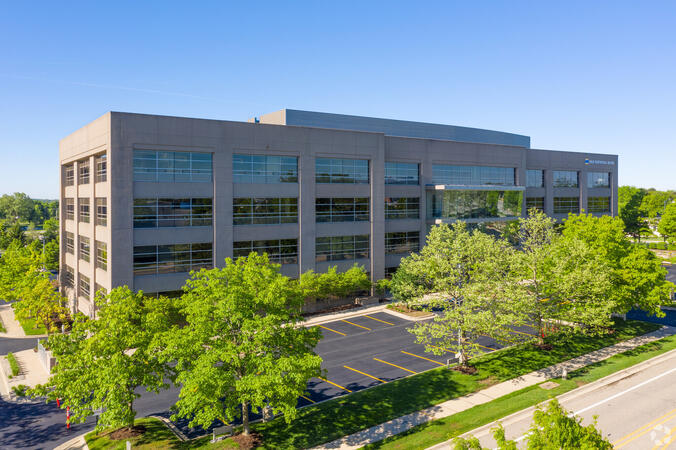
Ann Arbor, MI – Regus - South State Commons I
2723 S State St, Ann Arbor, United States, 48104
Regus South State Commons I is conveniently located off I‑94 via Exit 177 (State Street), with easy access to downtown Ann Arbor and surrounding suburbs. The building offers free on-site surface parking for guests. From Detroit Metropolitan Airport (DTW), the venue can be reached in approximately 20–25 minutes by taxi or rideshare via I‑94 West. Local public transit service (TheRide) operates Route 24 along South State Street, with a stop within a short 2-minute walk of the building.
Grand Rapids, MI - Regus – Calder Plaza
250 Monroe Ave NW, Grand Rapids, United States, 49503
The venue sits centrally at 250 Monroe Avenue NW in downtown Grand Rapids, easily accessed by car via US‑131 or I‑196—with connections via Monroe or Ottawa exits—and offers shared underground and surface parking. From Gerald R. Ford International Airport, take I‑96 East then I‑196 West into the city; the drive is about 20 minutes. Public transit through Rapid bus routes stops near Monroe or Ottawa Avenue, just a short walk from the Regus entrance; the downtown area is pedestrian-friendly.
Lansing, MI - Regus - One Michigan Avenue
120 North Washington Square, Lansing, United States, 48933
The venue is located in the heart of Lansing’s central business district at 120 North Washington Square, easily accessible by car via I‑496 or US‑127 with convenient street parking and a nearby parking ramp. From Capital Region International Airport (LAN), the location is approximately a 12‑minute drive west via I‑96 and US‑127, with taxis and rideshares readily available. Public transit users can take CATA bus routes that stop just a block away on Washington or Grand Avenue, offering seamless access to the venue.
Red Hat System Administration III is focused on automation of Linux system administration tasks using Red Hat Ansible Automation Platform.
This instructor-led, live training (online or onsite) is aimed at intermediate-level Linux system administrators who wish to automate common administrative tasks and prepare for the Red Hat Certified Engineer (RHCE) exam based on RHEL 9.
By the end of this training, participants will be able to:
Write and run Ansible playbooks to automate Linux administration.
Deploy and manage systems using Ansible roles, inventories, and variables.
Control access, configure services, and automate security policies.
Prepare for and take the EX294 RHCE certification exam.
Format of the Course
Interactive lecture and discussion.
Hands-on implementation in Red Hat Enterprise Linux 9.
Guided labs focused on automation tasks aligned with RHCE exam objectives.
Course Customization Options
To request a customized training for this course based on your automation or certification goals, please contact us to arrange.
Microsoft Endpoint Configuration Manager (MECM) is a comprehensive tool for deploying, managing, and securing devices and applications across an enterprise.
This instructor-led, live training (online or onsite) is aimed at intermediate-level IT professionals who wish to install, configure, and manage Microsoft Endpoint Configuration Manager to support modern enterprise desktop and application management.
By the end of this training, participants will be able to:
Install and configure Microsoft Endpoint Configuration Manager infrastructure components.
Deploy operating systems, applications, and updates across devices.
Monitor compliance and inventory using integrated tools and reports.
Integrate MECM with Intune for co-management and modern device management.
Format of the Course
Interactive lecture and discussion.
Lots of exercises and practice.
Hands-on implementation in a live-lab environment.
Course Customization Options
To request a customized training for this course, please contact us to arrange.
Ansible Tower is the enterprise framework for managing and scaling Ansible automation across complex IT environments.
This instructor-led, live training (online or onsite) is aimed at intermediate-level IT professionals who wish to deploy, configure, and operate Ansible Tower as part of an enterprise automation strategy.
By the end of this training, participants will be able to:
Install and configure Ansible Tower for enterprise use.
Manage users, teams, inventories, and credentials in Tower.
Launch and monitor playbooks through job templates and workflows.
Secure and scale Ansible automation across teams and departments.
Format of the Course
Interactive lecture and discussion.
Hands-on use of Ansible Tower in enterprise-scale scenarios.
Guided exercises focused on deployment, management, and security of Tower infrastructure.
Course Customization Options
To request a customized training for this course based on your organization’s automation infrastructure, please contact us to arrange.
Ansible Automation is a powerful framework for IT automation, configuration management, and deployment at scale.
This instructor-led, live training (online or onsite) is aimed at intermediate-level DevOps professionals who wish to design, develop, and maintain advanced Ansible automation content and integrate it into larger IT operations.
By the end of this training, participants will be able to:
Develop custom Ansible modules and plugins.
Create complex playbooks with Jinja2, filters, and conditional logic.
Integrate Ansible with APIs and version control systems.
Structure content using Collections and Roles.
Format of the Course
Interactive lecture and discussion.
Hands-on use of Ansible Automation Platform in sample enterprise scenarios.
Guided exercises focused on development, integration, and testing of Ansible content.
Course Customization Options
To request a customized training for this course based on your Ansible use cases, please contact us to arrange.
This instructor-led, live training in Michigan (online or onsite) is aimed at system administrators who wish to learn about Microsoft Endpoint Configuration Manager (MECM) and use it to manage infrastructures.
By the end of this training, participants will be able to:
Learn about Microsoft Endpoint Configuration Manager and how it works.
Puppet is an open-source configuration management tool used to automate infrastructure provisioning, configuration, and management across servers and environments.
This instructor-led, live training (online or onsite) is aimed at beginner-level to intermediate-level system administrators who wish to use Puppet to automate system configuration in a Master-Client environment.
By the end of this training, participants will be able to:
Install and configure Puppet on master and client systems.
Write and apply Puppet manifests to manage configuration.
Create and reuse Puppet modules, templates, and classes.
Implement conditional logic and ordering in Puppet manifests.
Format of the Course
Interactive lecture and discussion.
Lots of exercises and practice.
Hands-on implementation in a live-lab environment.
Course Customization Options
To request a customized training for this course, please contact us to arrange.
The course is intended to give engineers who currently use Ansible knowledge of the deeper and more specialist areas involved in its application.
The aim of the workshop is to give a greater understanding of what goes on "under the hood", how Ansible can be used in the application development lifecycle, and how Ansible can be tailored for scaled and enterprise environments.
Course objectives:
Understand the basics of Ansible
Learn how to install and configure Ansible
Explore the core components of Ansible: Playbooks, Modules, and Inventory
Implement automation tasks using Ansible
Execute Ansible Playbooks to manage and automate remote servers
This instructor-led, live training in Michigan (online or onsite) is aimed at DevOps engineers, developers, and project managers who wish to efficiently execute preprogrammed functions and administer software development workflows using the powerful RESTful API of Ansible AWX.
By the end of this training, participants will be able to:
Install and configure Ansible AWX on their preferred software development environment.
Understand the DevOps principles and concepts foundational to Ansible AWX.
Utilize AWX's automation tools to enhance workflows and facilitate DevOps processes.
Integrate AWX with external resources to leverage its features and collaborate with teams.
This instructor-led, live training in Michigan (online or onsite) is aimed at DevOps engineers, developers, and SysOps administrators who wish to maximize the tools and features made available through the Ansible project for the advancement of organizational IT infrastructures and processes.
Simultaneously, they can utilize the opportunity to carry out complex Ansible implementations for large-scale applications while employing its open-sourced tower for optimized DevOps management and collaboration functions.
By the end of this training, participants will be able to:
Install and configure Ansible along with other open-source tools and resources.
Establish a centralized system for DevOps management using Ansible project features.
Operate automation tools and advanced resources of Ansible to achieve CI/CD approach.
Execute better SysOps methods using Ansible's collaborative features for management of larger teams.
Enhance DevOps tasks execution within the organization and optimize existing ones.
Integrate Ansible with external platforms and leverage other Ansible tools for the organization's advantage.
This instructor-led, live training in Michigan (online or onsite) is aimed at network or DevOps engineers who wish to use Ansible to manage network systems more efficiently through automation.
By the end of this training, participants will be able to:
Set up the necessary development environment to start building and using network automation.
Create Ansible playbooks for executing and automating tasks in multiple network systems.
Use Python network automation scripts to manage and configure network devices.
Manage network configuration changes dynamically using Jinja2 templates.
This instructor-led, live training in Michigan (online or onsite) is aimed at DevOps engineers who wish to automate IT infrastructure with Ansible and Puppet.
By the end of this training, participants will be able to:
Configure and manage IT infrastructure.
Build a pipeline for effective code deployment.
Implement self-service infrastructure and application delivery.
This 2-day course demonstrates through hands-on practice the basics of Chef, a configuration management tool, and how to use Chef for infrastructure automation.
This instructor-led, live training in Michigan (online or onsite) is aimed at beginner-level to product leads and senior managers who wish to understand the benefits and challenges of configuration management for their products and projects
By the end of this training, participants will be able to:
Explain the need and requirements for configuration management.
Identify the elements and terminology of configuration management.
Apply the life cycle concepts and quality aspects of configuration management.
Develop and implement configuration management plans and strategies.
Deal with commercial off-the-shelf (COTS) and lean products and components.
Use configuration identification and self-auditing approaches.
Perform configuration verification and audit.
Assess and improve configuration management processes.
Use configuration management tools and technologies.
Estimate and manage the costs involved in configuration management.
This instructor-led, live training in Michigan (online or onsite) is aimed at system operators and administrators who wish to use Foreman and Katello to manage and monitor their servers and infrastructures.
By the end of this training, participants will be able to:
Set up Foreman to automate provisioning and configuration of systems.
Install Katello to implement its content management features to create, organize, and manage repositories.
Track infrastructure changes using Foreman's reporting and monitoring features.
Saltstack (Salt for short) is open source software developed to automate the configuration of server systems. During this course you will learn how to centrally administer and manage multiple server environments.
The course will be a good mixture of presentations, examples and lab exercises so that you can immediately apply what you have learnt.
This instructor-led, live training in Michigan (online or onsite) will be a good mixture of presentations, examples and lab exercises so that you can immediately apply what you have learnt.
This instructor-led, live training in Michigan (online or onsite) is aimed at system administrators who wish to use Microsoft SCCM to manage infrastructures.
By the end of this training, participants will be able to:
Use the Configuration Manager console for infrastructure management.
Configure public key infrastructures to secure Microsoft SCCM.
Perform advanced application deployment and troubleshooting.
This instructor-led, live training in Michigan (online or onsite) is aimed at intermediate-level to advanced-level developers and system administrators who wish to enhance their Puppet knowledge and expertise.
By the end of this training, participants will be able to:
Master advanced Puppet concepts and techniques.
Efficiently manage configurations using Puppet.
Implement best practices for module development.
Decouple configuration from code using Hiera.
Write custom facts and functions to extend Puppet's functionality.
Effectively manage relationships in Puppet.
Handle artifacts such as files, snippets, templates, and blobs.
This instructor-led, live training in Michigan (online or onsite) is aimed at system operators and administrators who wish to use Satellite to manage Red Hat Enterprise Linux hosts.
By the end of this training, participants will be able to:
Configure Red Hat Satellite to deploy software and servers.
Use management tools to schedule tasks and run remote execution commands.
Perform server maintenance to manage system security, recoverability, and growth.
This instructor-led, live training in Michigan (online or onsite) is aimed at DevOps engineers, developers, and SysOps administrators who wish to employ the Red Hat Ansible Automation Platform for executing software development functions and orchestrating advanced IT processes.
Furthermore, they can demonstrate and hone Ansible practices that are advantageous to specific enterprise applications, all the while efficiently collaborating with their respective teams for the accomplishment of complex business functionalities.
By the end of this training, participants will be able to:
Install and configure Red Hat Ansible Automation Platform within the preferred environment.
Familiarize with advanced Ansible features for centralizing and managing projects.
Utilize automation tools and higher-level resources of Red Hat Ansible to achieve CI/CD approach.
Perform administrative methods for better collaboration of larger teams.
Enhance DevOps tasks execution within the organization and optimize existing ones.
Integrate Ansible Automation Platform with other Red Hat distributions to maximize productivity.
This instructor-led, live training in Michigan (online or onsite) is aimed at intermediate-level system administrators and IT professionals who wish to effectively manage, optimize, and secure RHEL 8 environments using the latest tools and techniques.
By the end of this training, participants will be able to:
Install and configure RHEL 8 for enterprise use.
Use advanced tools like App Streams, Stratis, and the Virtual Data Optimizer for efficient storage management.
Implement secure networking using NFTables and Firewalld.
Automate systems administration tasks with Ansible, including the deployment and scaling of tasks.
Manage the lifecycle of containers and secure deployments in production environments.
SaltStack (or Salt) is a Python-based, open-source configuration management tool for automating the provisioning of hardware and software in an IT environment. SaltStack is popular as an orchestration tool in cloud and IT operational environments.
In this instructor-led, live training (onsite or remote), participants will learn how to deploy SaltStack as they step practice hands-on the setup, configuration, provisioning, optimizing and troubleshooting of a collection of servers in a simulated cloud environment.
By the end of this training, participants will be able to:
Install and configure Saltstack
Automate administrative tasks related to infrastructure
Provision and manage new code and application packages
Create reusable configuration templates
Use SaltStack to monitor your systems
Develop strategies to optimize infrastructure
Troubleshoot SaltStack and environment issues
Audience
System administrators
DevOps engineers
Format of the Course
Part lecture, part discussion, exercises and heavy hands-on practice
Notes
To request a customized training for this course, please contact us to arrange.
SaltStack (or Salt) is a Python-based, open-source configuration management tool for automating the provisioning of hardware and software in an IT environment. SaltStack is popular as an orchestration tool in cloud and IT operational environments.
In this instructor-led, live training (onsite or remote), participants will learn the advanced features of SaltStack as they practice the setup, configuration, provisioning, optimizing and troubleshooting of a collection of servers and applications in a live lab environment.
Audience
System administrators
DevOps engineers
Format of the Course
Part lecture, part discussion, exercises and heavy hands-on practice
Notes
To request a customized training for this course, please contact us to arrange.
Zammad is a modern, web-based, open-source helpdesk and customer support system. It unifies tickets from email, chat, phone, and social media into a single queue, providing a self-hosted alternative to Zendesk, Freshdesk, and ServiceNow that keeps customer data within your infrastructure.
This instructor-led, live training (online or onsite) is aimed at intermediate support managers and system administrators who wish to use Zammad to replace cloud helpdesk platforms with a self-hosted, sovereign ticketing system.
By the end of this training, participants will be able to:
Install Zammad from packages or Docker with PostgreSQL.
Configure email, chat, and API channels for ticket ingestion.
Design workflows, escalations, and SLA timers.
Set up role-based access, groups, and organizations.
Integrate with knowledge base, reporting, and webhooks.
Format of the Course
Interactive lecture and discussion.
Lots of exercises and practice.
Hands-on implementation in a live-lab environment.
Course Customization Options
To request a customized training for this course, please contact us to arrange.
Read more...
Last Updated:
Testimonials (10)
Expertise of the trainer
Ivan Micetic - Sparkle S.p.a.
Course - Foreman and Katello
Labs and hands on
MIR YOUSUF - Business Computer Skills
Course - Red Hat System Administration III (RHEL9) – RH294+EX294
The details that Konrad explained.
Sander - Cobbler
Course - Configuration Management with SaltStack
Trainer patience and delivery of topics
Amit - Optimus Learning Services
Course - Ansible for Network Engineers
Good hands on lab and training guide
Raymond - GOVERNMENT TECHNOLOGY AGENCY
Course - Introduction to Ansible Automation
Dr. Kelly was great and demonstrated several useful tips. I particularly appreciated how he was willing to field our questions and problem solve on-the-fly.
John - San Manuel Band of Mission Indians
Course - Microsoft SCCM
I like how illustrations were made clear in all the materials given during thre training. Thank you for all you put into the success of this training the method she used in the training was easy to understand. I am happy I participated in this training.
Connie Ray Rhem Jr - Spathe System
Course - Configuration Management for Managers and Leaders
Trainer knowledge in the subject was very Good.
Fayaz - Skillsoft
Course - Managing Configuration with Ansible
the Automation and speaking to different software packages
Eric Van Wyk
Course - Ansible for Experts
1. Very detailed course
2. Very well-informed trainer
3. Great explanations and examples
Online Configuration Management training in Michigan, Configuration Management training courses in Michigan, Weekend Configuration Management courses in Michigan, Evening Configuration Management training in Michigan, Configuration Management instructor-led in Michigan, Evening Configuration Management courses in Michigan, Configuration Management instructor in Michigan, Configuration Management on-site in Michigan, Configuration Management boot camp in Michigan, Configuration Management instructor-led in Michigan, Online Configuration Management training in Michigan, Configuration Management trainer in Michigan, Configuration Management one on one training in Michigan, Configuration Management coaching in Michigan, Weekend Configuration Management training in Michigan, Configuration Management classes in Michigan, Configuration Management private courses in Michigan