



Online or onsite, instructor-led live BPM (Business Process Management) training courses demonstrate through hands-on practice how to understand, plan and implement BPM within an organization. Our BPM courses include theory, case study discussions and practical application of the concepts learned in a live lab environment, all aimed at helping participants increase the operational efficiency of their organizations.
BPM training is available as "online live training" or "onsite live training". Online live training (aka "remote live training") is carried out by way of an interactive, remote desktop. Onsite live BPM trainings in Georgia can be carried out locally on customer premises or in NobleProg corporate training centers.
NobleProg -- Your Local Training Provider
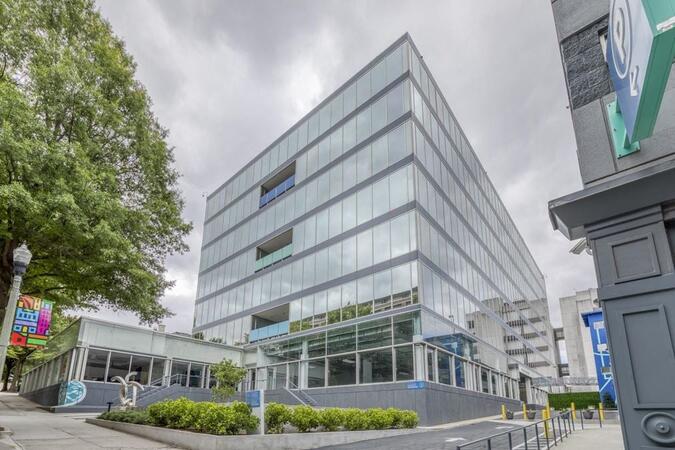
Atlanta, GA – Regus at Colony Squar
1201 Peachtree Street NE, Suite 200, Atlanta, United States, 30361
The venue is centrally located in Midtown Atlanta within the prominent Colony Square complex at 1201 Peachtree Street NE, easily accessed by car via I‑75/85 or GA‑400, with several parking garages nearby. From Hartsfield–Jackson Atlanta International Airport (ATL), around 15 miles south, a taxi or rideshare typically takes 20–30 minutes north along I‑75/85 N. Public transit users can take MARTA Rail to the Arts Center or Midtown stations (0.3–0.5 miles away) and walk easily, and numerous MARTA bus routes along Peachtree Street stop directly outside the entrance.

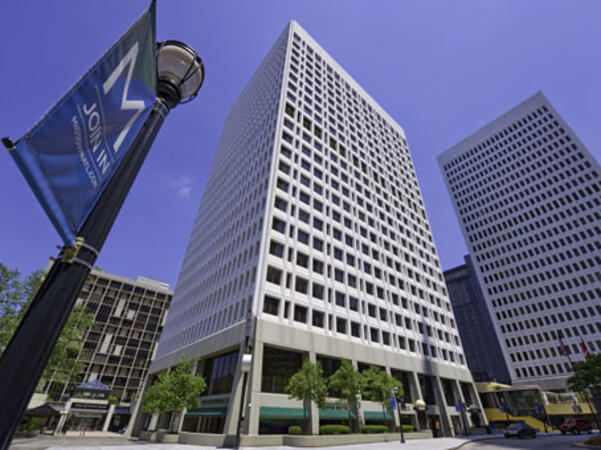
Atlanta, GA – The Proscenium
1170 Peachtree Street NE, Atlanta, United States, 30309
The venue is located in the heart of Midtown Atlanta in the Proscenium high–rise at 1170 Peachtree Street NE, easily accessible by car via I‑75/85 and GA‑400 with several parking garages nearby. Visitors arriving from Hartsfield–Jackson Atlanta International Airport (ATL), about 15 miles south, can expect a taxi or rideshare ride taking 20–30 minutes via I‑75/85 North. Public transit is seamless with MARTA Rail service; the Arts Center and Midtown stations are within walking distance (approximately 0.3–0.4 miles), and multiple MARTA bus routes also serve Peachtree Street.
Decatur, GA – Regus at One West Court Square
One West Court Square, Suite 750, Decatur, United States, 30030
The venue is located in the heart of downtown Decatur within One West Court Square, easily reached by car via I‑20 and I‑285, with several public parking decks directly adjacent. Travelers from Hartsfield–Jackson Atlanta International Airport (ATL), approximately 17 miles southwest, can expect a taxi or rideshare ride of around 25–30 minutes via I‑20 East. Public transit is particularly convenient: MARTA rail users can disembark at Decatur Station (about 0.15 miles away) and walk a few minutes to the building entrance. Local bus routes also serve Trinity Place and Swanton Way, putting the center within easy reach.
Atlanta, GA – Regus at One Hartsfield
100 Hartsfield Centre Parkway, Suite 500, Atlanta, United States, 30354
The venue is located in the One Hartsfield Center office building, adjacent to Hartsfield–Jackson Atlanta International Airport, easily reached by car via I‑75/I‑85 or GA‑138, with abundant on-site parking. Visitors arriving from ATL airport can walk or take a shuttle to the building, or opt for a quick 2–3‑minute taxi or rideshare ride. Public transit users can board MARTA from the Airport Station and ride one stop to College Park Station, then catch a connecting shuttle or enjoy a brief walk of about half a mile.
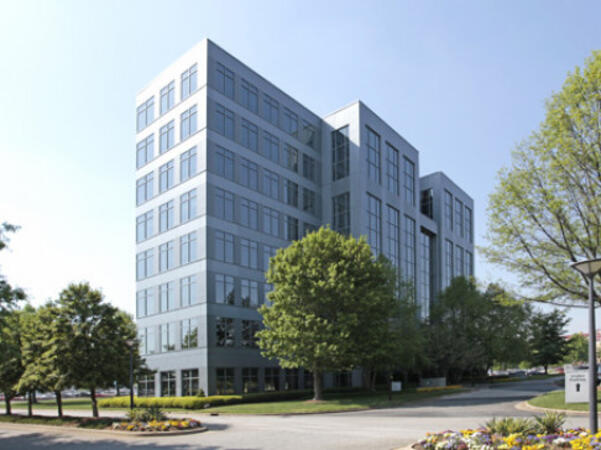
Atlanta, GA – Regus at Peachtree
260 Peachtree Street NW, Suite 2200, Atlanta, United States, 30303
The venue is situated in the iconic Coastal States Building at 260 Peachtree Street in downtown Atlanta, accessible by car via I‑75/85 or I‑20 with convenient parking garages nearby. From Hartsfield–Jackson Atlanta International Airport (ATL), about 12 miles south, a taxi or rideshare along I‑75/85 North takes approximately 15–20 minutes. For public transit, MARTA rail users can disembark at Five Points Station and walk 0.5 miles northeast, or exit at Peachtree Center Station and walk two blocks north—both routes offering easy access.
Augusta, GA – At Broad Street
823 Broad Street, Augusta, United States, 3090
The venue is located in the heart of downtown Augusta on Broad Street, easily accessible by car via I‑20 with several public parking garages nearby. From Augusta Regional Airport (AGS), about 9 miles west, taxis or rideshares typically take 15–20 minutes via I‑20. Public transit is available through Augusta Public Transit buses with routes along Broad Street, stopping within a few blocks of the venue, offering a convenient option for attendees without a car.
Savannah, GA – Regus at Bull Street
100 Bull St Downtown, Suite 200, Savannah, United States, 31401
The venue is located in the historic downtown area on Bull Street in the Altmayer Building, easily accessible by car via I‑16 and U.S. 17, with several public garages nearby. From Savannah/Hilton Head International Airport (SAV), about 12 miles west, taxis or rideshares typically take 15–20 minutes via U.S. 17 South. Public transit is available via Chatham Area Transit (CAT) buses, with frequent service along Bull and Broughton Streets; Johnson Square Station is just a couple minutes’ walk from the venue.
This instructor-led, live training in Georgia (online or onsite) is aimed at advanced-level participants who wish to integrate Drools 8 with jBPM to design, execute, and optimize business workflows and processes.
By the end of this training, participants will be able to:
Set up Drools 8 and jBPM environments for development.
Define and manage complex business rules in Drools 8.
Design and execute workflows using jBPM.
Integrate Drools rules into jBPM processes for dynamic decision-making.
This instructor-led, live training in Georgia (online or onsite) is aimed at beginner-level to intermediate-level business analysts who wish to use DSLs in Drools 8 to define, manage, and optimize business rules without relying heavily on technical programming skills.
By the end of this training, participants will be able to:
Understand the core concepts of Drools 8 and its architecture.
Create DSLs to simplify business rule definitions for non-technical users.
Manage, test, and maintain rules effectively using Drools Workbench.
Collaborate with technical teams to implement and refine business rules.
Apply best practices for rule optimization and lifecycle management.
This instructor-led, live training in Georgia (online or onsite) is aimed at advanced-level participants who wish to optimize rule execution, integrate Drools with enterprise systems, and leverage advanced features like decision tables and domain-specific languages (DSLs).
By the end of this training, participants will be able to:
Optimize the performance of complex rule execution.
Utilize advanced Drools features such as decision tables, DSLs, and rule templates.
Integrate Drools seamlessly with enterprise applications and external systems.
Implement robust version control and collaboration mechanisms for rule development.
Design and deploy scalable Drools-based solutions for enterprise needs.
This instructor-led, live training in Georgia (online or onsite) is aimed at intermediate-level participants who wish to build and manage complex business rules, optimize rule execution, and handle rule dependencies effectively using Drools 8.
By the end of this training, participants will be able to:
Create advanced business rules and manage their dependencies.
Implement decision-making logic using Drools rule groups and agendas.
Optimize the performance of rule execution in Drools.
Use advanced Drools Workbench features for rule management.
Integrate Drools with external data sources and systems.
Modeling and Documentation for Business Analysis is a practical course focused on standard modeling languages and tools used to capture, visualize, and validate business requirements and processes.
This instructor-led, live training (online or onsite) is aimed at professionals with limited or no experience in modeling who wish to apply industry-standard techniques like UML, BPMN, and wireframing tools to improve clarity and communication in business analysis projects.
By the end of this training, participants will be able to:
Use UML diagrams to represent functional requirements and system behavior.
Model business processes using BPMN standards.
Create clear and structured use case diagrams and documentation.
Design wireframes and interactive prototypes using Figma and Balsamiq.
Format of the Course
Interactive lecture and discussion.
Hands-on use of modeling tools in sample project scenarios.
Guided exercises focused on process, requirements, and UI modeling.
Course Customization Options
To request a customized training for this course based on your organization’s standards or preferred toolset, please contact us to arrange.
This instructor-led, live training in Georgia (online or onsite) is aimed at all-level project managers who wish to gain Green Belt certification knowledge in BPMN to streamline project workflows, improve process efficiency, and ensure compliance with business standards.
By the end of this training, participants will be able to:
Understand the core concepts and components of BPMN 2.0.
Create and interpret BPMN diagrams to represent business processes.
Optimize workflows using best practices in BPMN modeling.
Identify and eliminate inefficiencies in business processes.
Integrate BPMN into project management and process improvement initiatives.
This instructor-led, live training in Georgia (online or onsite) is aimed at beginner-level business analysts who wish to gain practical knowledge of Celonis for process mining, optimization, and automation, empowering them to unlock efficiencies and enhance business performance.
By the end of this training, participants will be able to:
Understand the fundamentals of process mining and how to use Celonis effectively.
Integrate data sources, discover, and visualize processes.
Gain expertise in analyzing processes using KPIs and benchmarks.
Automate workflows and leverage Celonis Action Engine for task automation.
Build and customize dashboards and reports for real-time monitoring.
This instructor-led, live training in Georgia (online or onsite) is aimed at beginner-level participants who wish to learn the basics of Drools 8, set it up, and create simple business rules for better decision-making and automation.
By the end of this training, participants will be able to:
Understand the purpose and benefits of using Drools 8.
Set up the Drools environment and integrate it with applications.
Create, test, and deploy simple business rules.
Use Drools Workbench for rule management and decision tables.
Implement Drools in real-world scenarios to automate decisions.
This course has been created for business analysts who want to use BPMN 2.0 extensively in their projects.
It focuses on practical aspects of all BPMN 2.0 specification as well as implementations of common patterns.
It is a series of short lectures followed by exercises: the delegates will have a problem described in English, and will have to create a proper diagram for each problem. After that, the diagrams will be discussed and assessed by the group and the trainer.
This course doesn't cover execution part of BPMN, it focuses on analysis and process design aspects of BPMN 2.0.
This instructor-led, live training in Georgia (online or onsite) is aimed at beginner-level participants who wish to learn essential concepts in probability, statistics, programming, and machine learning, and apply these to AI development.
By the end of this training, participants will be able to:
Understand basic concepts in probability and statistics, and apply them to real-world scenarios.
Write and understand procedural, functional, and object-oriented programming code.
Implement machine learning techniques such as classification, clustering, and neural networks.
Develop AI solutions using rules engines and expert systems for problem-solving.
It is a course that positions itself in the midst of administration and Information Technology, incorporating tools and techniques for designing, implementing, controlling and analyzing Operational Business Processes - This usually involves individuals, organizations and software applications.
This course contains practical assignments, participants will be introduced to topics during theory classes and these will be accompanied by practical exercises.
What will you learn?
1. The Basics of BPM
2. BPM Implementation Strategies
3. Process modeling, analysis and design
4. Governance and business strategies
5. Modeling a process with BPMN
6. Business rules
Managers who want to make decisions related to BPM, Business Consultants, Business Analysts, Business Process Engineers, System Analysts, Anyone who is involved in analysing and planning Business Processes.
Course Goals:
How to increase productivity and effectiveness
How to increase business process compliance and governance
How to make a business process more agile and enable it for a change
How to increase ability to scale best practices across a changing organization
How to improve communication, cooperation, coordination between teams
How to improve visibility of process pipeline
How to make operational forecasts more accurate
How to increase process throughput
How to minimize cost of inputs by leading the process actors through the process, and reduce high quality, expensive staff
How to make new hire ramp-up faster, by making new hires following the business process documentation
Managers who want to make decisions related to BPM, Business Consultants, Business Analysts, Business Process Engineers, System Analysts, Anyone who is involved in analysing and planning Business Processes.
This BPM training will teach you how to automate and manage a broad range of business workflows. We will examine the automation steps within a typical process in which work items are passed from one participant to another for action, according to a set of business rules. You will obtain firsthand guidance on automated monitoring best practices as well as tips and tricks for efficient governance practices.
At course completion, you will be able to:
Understand the key terms and concepts in BPM
Use major methodologies and techniques for implementing BPM
Define the various technologies that support BPM
Learn to discriminate between process and rules requirements
Map written business cases into process areas and rule sets
Understand variations in strategies between rules-centric and process centric approaches
Develop business intelligence from process description & rule sets
This course has been created for anyone responsible for modelling processes in BPMN 2.0.
It focuses on practical aspects of all BPMN 2.0 specification as well as implementations of common patterns.
It is a series of short lectures followed by exercises: the delegates will have a problem described in English, and will have to create a proper diagram for each problem. After that, the diagrams will be discussed and assessed by the group and the trainer.
This course focuses on understand the BPMN diagrams but also covers basic part of the execution part of BPMN.
This course has been created for people who want to use BPMN 2.0 extensively in their projects.It focuses on practical aspects of all BPMN 2.0 specification as well as implementations of common patterns.
This course doesn't cover execution part of BPMN, it focuses on analysis and process design aspects of BPMN 2.0.
Format of the Course
Interactive lecture and discussion.
Lots of exercises and practice using Camunda Modeler.
Hands-on implementation in a live-lab environment.
Business Process Model and Notation (BPMN), Decision Model and Notation (DMN) and Case Management Model and Notation (CMMN) are three Object Management Group (OMG) standards for processes, decisions, and case modelling. This course provides an introduction to all of them and informs when should we use which.
This training course aims at helping business analysts to learn to model efficiently their business processes using BPMN as well as resources that are handled by their activities. Being conducted by an agile enterprise framework, business analysts learn during this course how to use appropriate BPMN notations and business extensions of UML in order to deal with their "business requirements" and coherently drive underlying design level activities.
This course is aimed at enterprise architects, business and system analysts and managers who want to apply business rules to their solution. With Drools, you can write your business rules using almost natural language, therefore reducing the gap between business and IT.
This instructor-led, live training in Georgia (online or onsite) is aimed at beginner-level / intermediate-level / advanced-level individuals who wish to use to develop skills in business and process modeling for a better understanding of the organization, products, and dependencies between processes, data, and stakeholders.
By the end of this training, participants will be able to:
Understand the role of models as key communication tools in business analysis.
Be able to select the right modeling method (BPMN, UML, SIPOC, Business Model Canvas) for a specific business goal.
Know how to decompose complex business processes into clear diagrams.
Identify touchpoints between processes, data, and system actors.
Be able to assess the correctness and effectiveness of created business models.
This instructor-led, live training in Georgia (online or onsite) is aimed at intermediate-level developers who wish to get a solid introduction to Drools 6 and use it to implement business rules within their applications.
By the end of this training, participants will be able to:
Understand the core concepts and benefits of rule engines like Drools.
Use the Drools Workbench and Eclipse for rule authoring and testing.
Create, organize, and execute business rules with the Drools rule engine.
Apply advanced features like decision tables, ruleflows, and DSLs.
This 3 days course is aimed to introduce Drools 7 to Business Analysts responsible for writing tests and rules.
This course focuses on creating pure logic. Analysts after this course can writing tests and logic which then can be further integrated by developers with business applications.
This instructor-led, live training in Georgia (online or onsite) is aimed at intermediate-level system administrators and developers who wish to configure, manage, and deploy Java applications on the JBoss platform.
By the end of this training, participants will be able to:
Install and configure JBoss Application Server and its core components.
Customize JBoss AS services for monitoring, database connections, and transaction management.
Develop and deploy EJB 3 session beans and web applications.
Utilize the JBoss Messaging Service to deploy and manage JMS applications.
Manage JBoss AS through the Java Management Extension and Administration Console.
Implement JBoss Drools for business rules management and utilize the Guvnor tool for rule development and testing.
This instructor-led, live training in Georgia (online or onsite) is aimed at developers and business analysts who wish to build a management suite using jBPM.
By the end of this training, participants will be able to:
Follow business goals in detail, using flow charts.
Standarize a process to bridge the gap between design and the process implementation.
Standardize a business process model and notation.
Exchange BPMN definitions with other team members.
NobleProg has official OMG OCEB 2 Content Developer status, which means that our course outlines and training materials were developed by the same experts who prepared questions for OCEB 2 exams.
This course prepares you for the OMG Certified Expert in BPM (OCEB v2) Fundamental Examination.
After this course you can practise using our testing engine on over 200 sample questions.
IBM ODM (a.k.a. WebSphere Operational Decision Manager) is a Business Rule Management System (BRMS). It consists of a central repository and automation engine that allow for the creation, management, testing and governance of business rules and events. Rules and events are stored in the central repository where they can be accessed and modified by individuals and software without the need to rebuild any software.
In this instructor-led, live training, participants will learn how to create, manage and execute business rules as well as how to deploy and manage an instance of IBM ODM Decision Management in a live environment.
By the end of this training, participants will be able to:
Manage ODM components, including IBM Decision Center and IBM Decision Server
Manage and execute business rules and events
Reduce the testing cycle by enabling other software applications to detect and pick up changes to rules
Combine decision making and change detection tools to facilitate adaptation, auditing, tracing and testing
Separate business rules from business applications for greater flexibility
Build easy-to-maintain business rule client applications
Use Event Designer to build business event projects
Deploy and test business event applications
Build a customized dashboard for monitoring business events
Enable collaboration among architects, developers and administrators for developing and maintaining decision services
Enable business analysts, policy managers and rule authors develop and maintain an application's decision logic
Audience
Developers
Project managers
Format of the course
Part lecture, part discussion, exercises and heavy hands-on practice
This course uses a practical approach to teaching OptaPlanner. It provides participants with the tools needed to perform the basic functions of this tool.
This course introduces the student to the Python language. Upon completion of this class, the student will be able to write non trivial Python programs dealing with a wide variety of subject matter domains. Topics include language components, working with a professional IDE, control flow constructs, strings, I/O, collections, classes, modules, and regular expressions. The course is supplemented with many hands-on labs, solutions, and code examples.
After Completing the course students will be able to demonstrate knowledge and understanding of Python Security Principles.
In this instructor-led, live training in Georgia (online or onsite), participants will learn how to identify the key process variables and connect them as they step through the creation of a business flow using RPA Express.
By the end of this training, participants will be able to:
Install and configure RPA Express.
Identify the steps and actions to be recorded by RPA Express.
Use RPA Express to map out a business flow.
Create bots to capture and repeat events on a website, desktop or terminal.
This instructor-led, live training in Georgia (online or onsite) is aimed at beginner-level to intermediate-level professionals who wish to learn how to manage and optimize business processes using Signavio.
By the end of this training, participants will be able to:
Use drag-and-drop to create consistent, readable models that map an organization’s operations.
Collaboratively document, optimize, and simulate business processes.
Bonita BPM is an open-source business process management and workflow suite made up of three major components: Bonita Studio, Bonita BPM Engine and Bonita Portal. Bonita is often used in projects that require complex workflows such as Supply Chain Management, e-Government, Human Resources, and Contract management.
Format of the Course
Emphasis is on hands-on practice.
Concepts will be taught through samples, exercises and hands-on development.
This course is aimed at enterprise architects, business and system analysts, technical managers and developers who want to apply business rules to their solutions.
This course contains a lot of simple hands-on exercises during which the participants will create working rules. Please refer to our other courses if you just need an overview of Drools.
This course is usually delivered on the newest stable version of Drools and jBPM, but in case of a bespoke course, can be tailored to a specific version.
ProcessMaker is an Open Source BPM software application. It is a light weight, fully web based tool written in PHP, which can compete with expensive enterprise solutions.
This course presents you with how to implement process management using ProcessMaker, focusing on how to create a process definition, define roles, groups and users, and start a process from an external application.
This course prepares participants to execute business processes with BPMN. It covers graphical representation as well as commonly used attributes of the BPMN 2 elements.
Technology
This course is not platform specific, only elements and attributes covered by OMG specification are covered. By default, it uses jBPM, but any other tool can be used as long as the tool supports BPMN 2.0.
Class format
Participants will follow an example use cases followed by hands-on exercises, so they can execute their process.
Process mining, or Automated Business Process Discovery (ABPD), is a technique that applies algorithms to event logs for the purpose of analyzing business processes. Process mining goes beyond data storage and data analysis; it bridges data with processes and provides insights into the trends and patterns that affect process efficiency.
Format of the Course
The course starts with an overview of the most commonly used techniques for process mining. We discuss the various process discovery algorithms and tools used for discovering and modeling processes based on raw event data. Real-life case studies are examined and data sets are analyzed using the ProM open-source framework.
Managers who want to understand BPMN diagrams, Business Consultants, Business Analysts, Business Process Engineers, System Analysts and anyone who is involved in analyzing and planning Business Processes using standardized, unified modelling notation.
Course Goals:
Produce high-quality process diagrams
Model in the BPMN process notation
Capture as-is process information
Implement optimized process flows for people-intensive processes
Simplify complex process definitions and break them into more manageable pieces
The course aims at teaching the practical knowledge and learning BPMN modeling skills at the Intermediate and Advanced levels.
The ideal participant is a business analyst training, meaning the person discovering, identifying, gathering and analyzing user requirements to the system. - The advanced computer application developers and system architects interested in the prospect of creating business processes, system and custom drivers.
The course does not address issues Executable BPMN level.
Training is conducted in much the dominant technique in the form of a computer (~ 90%), during which the one hand, we translate real business situations for BPD, on the other hand ready to interpret diagrams assessing their practical utility.
The course is very intensive practical course in the strict sense, the training did not deal with in any way, theoretical considerations of BPMN.
The course aims at teaching the practical knowledge of BPMN modeling and learning basic skills.
The ideal student is a person who analyzes and documents the processes as a model, which is a business user IT system or business analyst collaborating with business people within a certain organizational function.
The training is conducted by a moderated discussion (40%) and computer workshop (60%). Part of the laboratory is to translate business situations described BPMN diagram
The course is a very intensive practical course in the strict sense, the training does not deal with in any way, the theoretical considerations of BPMN.
This course has been created for a process developers and software developers who want to know how to manage, manipulate and develope processes with jBPM. It covers components of jBPM and elements of BPMN 2 implemented in JBPM including managing signals and events, programming gateways, injecting processes data and running parallel activities. NobleProg tries to run this course on the newest version of the Open Source version of jBPM, but older version or beta version may be requested.
Although SOA is not specific to BPM software, there are a number of natural synergies between BPM and SOA. Perhaps most obvious of these is the separation of business process management as an independent function, allowing processes to be designed independently of any single application and leveraged as shared business logic.
Read more...
Last Updated:
Testimonials (9)
The most think i like about training was professional way to share the knowledge from trainer.
Mateusz Jezowicz vel Jezewski - Viessmann
Course - Signavio Process Manager
What I like the most about the training was the detailed discussion and the Exercises.
Kevin Roi Rimpos - Century Pacific Food Inc.
Course - Business Process Re-engineering for Competitive Advantage
The trainer shared his knowledge and led great atmosphere.
Agnieszka Dubanska - Narodowy Fundusz Zdrowia
Course - Modelowanie procesów biznesowych z wykorzystaniem UML i BPMN
Exercises and the interaction with the trainer
Patrick - Brose North America
Course - Business Process Modelling in BPMN 2.0
- trainer's knowledge
- trainers laid-back style
Maciej - EY GLOBAL SERVICES (POLAND) SP Z O O
Course - OCEB2 OMG Certified Expert in BPM - BPM 2 Fundamental Exam Preparation
Richard is a great teacher
Federico - Circle spa
Course - BPMN 2.0 for Business Analysts
the Trainer tailored the session to our organisation and help us understand what we could be improving on.
Christopher - Department of Training & Workforce Dev.
Course - BPMN 2.0 Fundamentals and Workshop
The trainer was so knowledgeable about the subject
Herman - Megatech Systems (Pty) Ltd
Course - jBPM for Developers
The pace was good, with a nice mixture of knowledge sharing, demonstrations and practical work. Filip was very engaging and provided the energy to get through the course. It was good that there was a lot of 1:1 tuition, with Filip going through individual training exercises.
Colin - Worldpay
Course - BPMN, DMN, and CMMN - OMG standards for process improvement
Online BPM (Business Process Management) training in Georgia, Business Process Management (BPM) training courses in Georgia, Weekend BPM courses in Georgia, Evening BPM (Business Process Management) training in Georgia, BPM instructor-led in Georgia, BPM private courses in Georgia, Business Process Management (BPM) boot camp in Georgia, Business Process Management (BPM) instructor in Georgia, Online BPM training in Georgia, BPM (Business Process Management) trainer in Georgia, Business Process Management (BPM) one on one training in Georgia, Weekend BPM (Business Process Management) training in Georgia, Business Process Management instructor-led in Georgia, Business Process Management (BPM) coaching in Georgia, Evening BPM (Business Process Management) courses in Georgia, BPM on-site in Georgia, Business Process Management classes in Georgia